With love, Las meninas
A painting that continues to inspire and influence artists ‘til this day.
Some even call it one of the most important pieces of art in all of arts history.
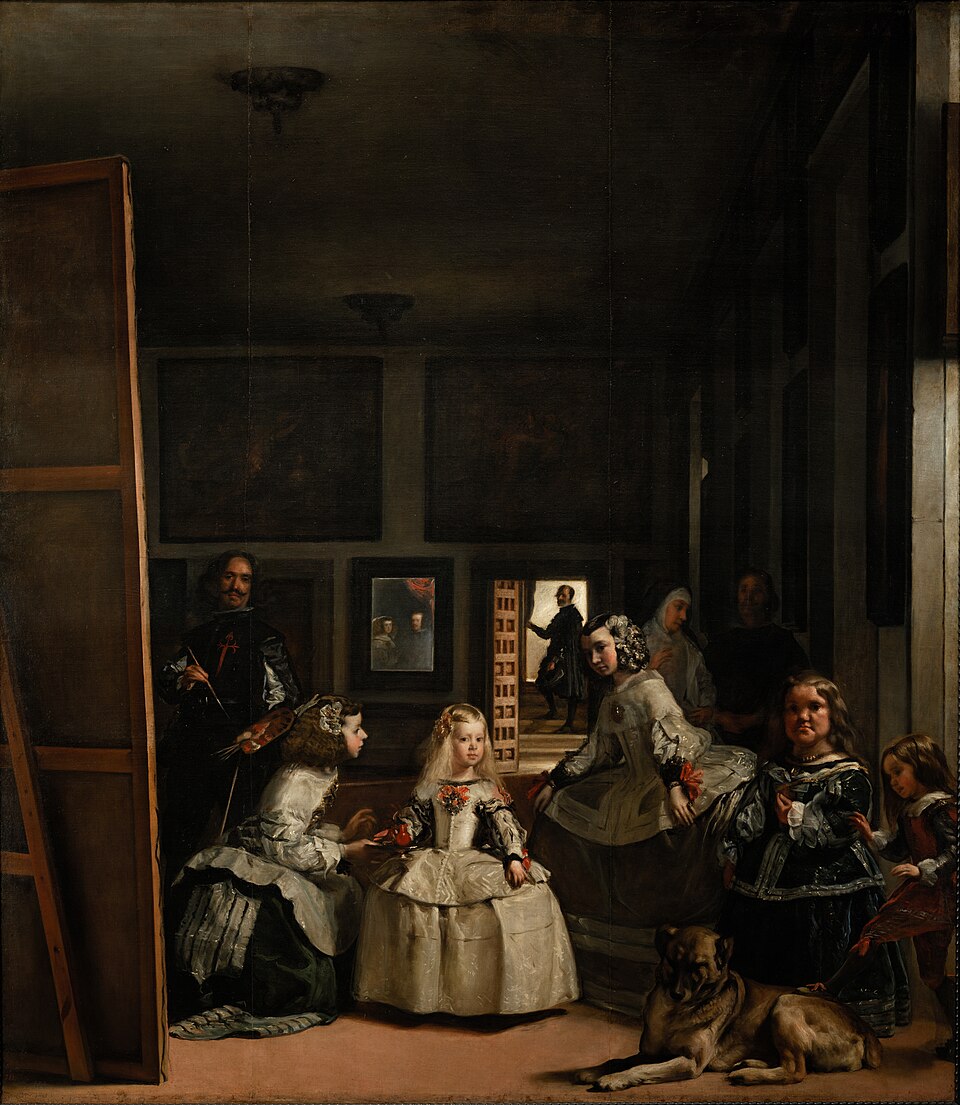
Painted by the Spanish artist Diego Velázquez (1599-1660) I reckon it’s because it cuts ties with how an artist, at that time, would normally portray a royal. While usually, you’d be focusing on the highest members of any royal family, in this case King Philip IV of Spain and Portugal and his wife and niece Queen Mariana, you’re instead compelled to focus on their daughter Infanta Margarita Teresa. You’re in the perspective of the King and Queen instead of being the viewer looking at Their Majesties.
It gives you a glimpse into a part of the everyday life of a royal court. The constant ensemble of people following you around. As if one can imagine and hear the conversations being had between the ladies in waiting and the Infanta, Their Majesties to their daughter, the artist (Diego himself) and his royal subjects and models. The sounds of every step taken and made by the man on the stairs in the background (Don José Nieto Velázquez) and an additional sound of the curtain being pulled to the side to invite more natural light into the room. Or the way I see it, him closing the curtain.
But with the use of mirrors and the reflection in the mirror, I can’t help but to be reminded of, as Art Deco said herself, Jan van Eyck’s painting The Arnolfini Portrait from 1434. I was amused to find out that I wasn’t the only one that saw the resemblance between these two.
‘Las Meninas’ also reminds me of John Singer Sargent’s painting The Daughters of Edward Darley Boit (1882), but at the opposite end of the spectrum. Where Velázquez illustrates community and a sense of togetherness, Sargent portrays a lingering feeling of distance and void.
Why is it still so popular?
For years I’ve wondered why this particular piece of gorgeous art was, and still is, considered one of the most important paintings in all of history of art. Is it because it plays with perspective? Depth and illusion that forces the eyes to wander and take a closer look at details? And thanks to said perspective, the fact that you, the viewer, is forced to act as a stand-in and characterize the role of a King and/or Queen since the painting is depicted from their aspect? Which automatically puts you, a commoner, at the same rank as a Majesty. What a bold move and a wild thought!
Another thought of mine is, an artist at that time needed his subjects to stand there as actual models for them to create and complete their paintings. Does that mean that every person in this painting were the actual subjects for this creation? Was this his idea all along? What was the point of this painting being created in the first place?
Thanks to its illusion, it does an amazing job at making one think that Diego is just painting a portrait of Their Majesties, but that’s thanks to the reflection of the mirror in the background and thanks to the fact that he painted himself into it.
I might actually start to understand why it’s a masterpiece after all.
What a mind fuck, or maybe it’s because it’s Sunday and I’m a tad hungover.
If you wish to learn more:
Great Art Explained: Las Meninas by Diego Velázquez
Artsy.net – Las Meninas
Other paintings I’ve written about:
The hunters in the snow
Norman Rockwell
Edward Hopper
The fallen angel
Portrait of a black woman